Fire wardens rest at the joint factor of safety and procedures. When there is smoke in the stairwell or a cutting lantern kicks off a little blaze on Level 4, individuals seek the bright hat and steady voice. The efficiency of that action hardly ever comes from heroics. It comes from peaceful prep work, great systems, and technique that transforms treatments into muscle memory. Having developed and led emergency control organisations across workplaces, storage facilities, and multi-tenant sites, I've seen how well-drafted strategies and regimented warden groups safeguard lives and maintain businesses resilient.
This guide lays out what qualified fire wardens and chief wardens do previously, throughout, and after an emergency. It likewise clarifies exactly how nationally recognised training like PUAFER005 and PUAFER006 supports those duties. Whether you handle a solitary floor or a sprawling campus, the obligations are comparable, the scale is what changes.
The role of the emergency situation control organisation
In most workplaces, the emergency control organisation (ECO) is a structured team of wardens trained to respond to fire, smoke, clinical occurrences, alarm systems, and any occasion that threatens life or service connection. At its head sits the chief warden, supported by replacement and location wardens. Their authority is functional, not supervisory. On a normal day, they might inspect egress routes and upgrade a flexibility support checklist. On a bad day, they take charge of discharge, coordinate with initial -responders, and account for everyone who was at work that morning.
The proficiencies behind this work are formalised in training devices. PUAFER005 Operate as part of an emergency control organisation creates wardens that can follow treatments, manage passengers, make use of communications systems, and understand their structure's dangers. PUAFER006 Lead an emergency control organisation develops primary wardens and replacements to plan, direct, and assess an entire incident. The difference is the extent of command. One operates efficiently within a well established strategy, the other builds and leads that plan under pressure.

Before an emergency situation: foundations that stand up under stress
When individuals think of fire wardens, they picture a person guiding a crowd down the stairways. The genuine work begins months earlier. Prep work closes voids that would otherwise open up throughout an incident.
Risk mapping drives whatever. A capable warden team walks the site, not just with a diagram however with a building contractor's eye. Where are the ignition resources in the workshop, and are hot job permits in fact used? Which occupancy stores solvents, and exactly how is ventilation dealt with? Where does smoke migrate if a door is propped open? On one commercial website, a single pallet maintained landing before a fire hydrant on dispatch days. It took consistent walk-throughs and a picture log to deal with the practice. That is warden persistence at its best.
Training converts those observations right into readiness. Fire warden training must be revitalized at least annually, and extra frequently in high-risk procedures or where turn over is high. A strong fire warden course mixes PUAFER005 elements like communications procedures and discharge approaches with site-specific web content, consisting of exactly how to operate your structure's emergency caution and intercom system, your staircase pressurisation regimens, and your assembly location format. When a warden hesitates at a panel due to the fact that the user interface is different from the training slides, you feel it. Use your actual tools in drills.
Chief wardens need the wider command skillset educated in PUAFER006. That consists of scenario planning, passing on wardens throughout areas, collaborating with safety and facilities, and making decisions under uncertainty. A chief warden course should also educate the uneasy parts of leadership, like when to purchase a partial evacuation versus a full one, and how to safeguard a search group without leaving various other occupants exposed.
Because a situation multiplies tiny errors, housekeeping and upkeep matter greater than a lot of appreciate. Exit doors that stick, scrubby photoluminescent course pens, or a missing out on fire extinguisher pin can slow a discharge by minutes. That is not an academic price. In a smoke-charged corridor, those minutes decide whether your warden is guiding alert individuals or taking care of panic.
The quiet admin work develops the tempo for response. Updated owner checklists, site visitor sign-in systems, and specialist controls enable wardens to fix up headcounts rapidly. In a multi-tenant structure, coordination contracts define that runs which drills and what happens when the alarm system activates in just one zone. The chief emergency warden still requires the authority to call a complete evacuation when conditions change.
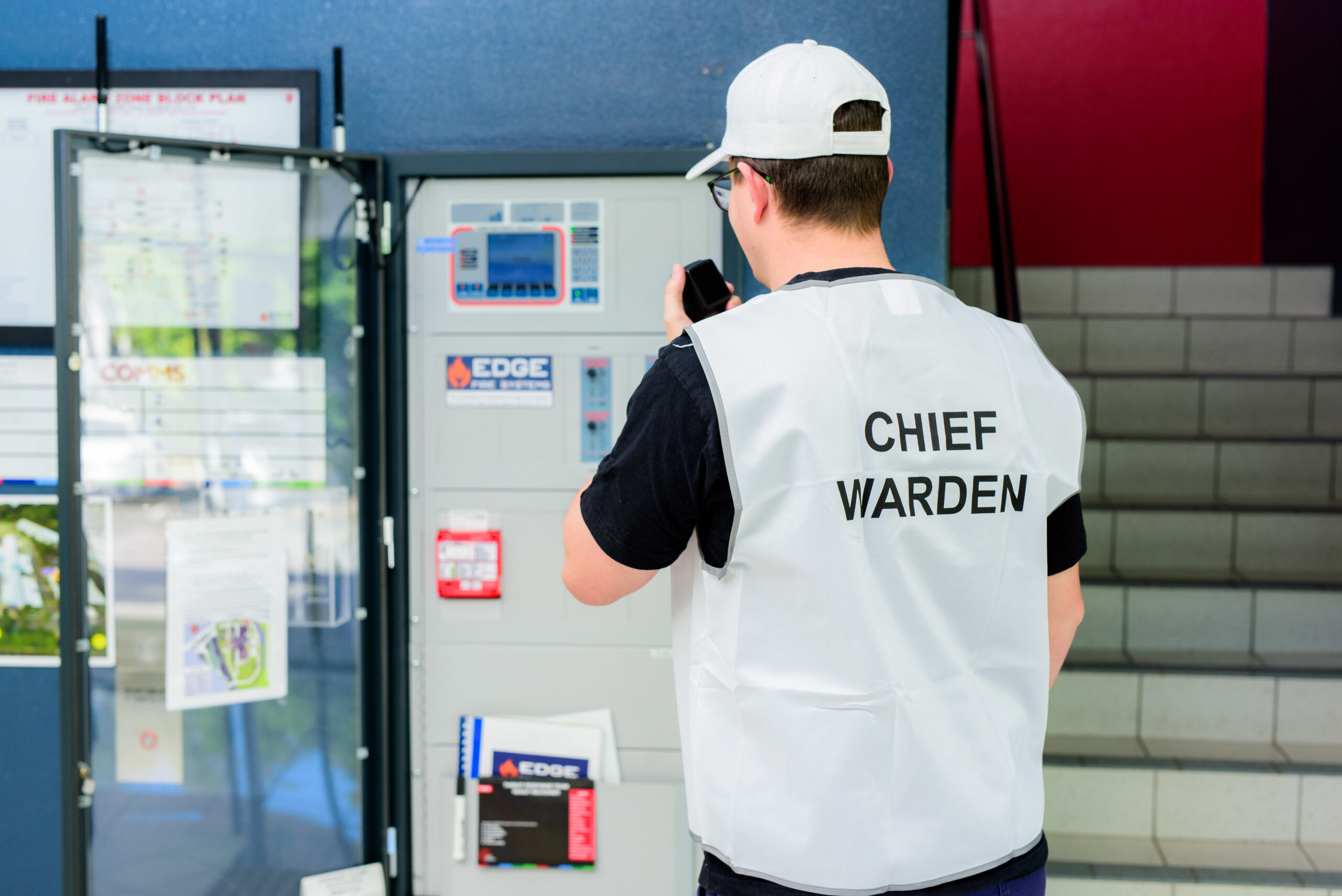
A quick note on hats and identification, due to the fact that it aids in the mayhem. Lots of work environments make use of coloured helmets or caps. An usual convention appoints white for the chief warden, yellow for location wardens, red for fire reaction roles, and eco-friendly for first aid, although variations exist. As opposed to concentrating on what colour helmet a chief warden wears theoretically, develop, display, and train to your site-specific plan. Individuals follow colours when they fear, far more than names. Whatever you pick, make it regular throughout sites that share staff.
The first five minutes: what good looks like during a fire
Most emergencies that disrupt workplaces start small. An overheated battery pack, a printer cigarette smoking, an electrical space alarm without any noticeable fire. The first 5 mins decide whether it remains little. Wardens that have actually trained with each other and trust their plan move in a cadence that keeps people calm while pressure rises.
Alarm and analysis need to be near-instant. The nearest warden investigates if it is secure to do so, while the chief warden or replacement heads to the control factor. Two-way interaction is non-negotiable. If you count on a single mobile phone, you are dating failure. Utilize the structure EWIS, radios with spare batteries, or both, and maintain wording disciplined. Short acknowledgments, not story time.
Evacuation decisions equilibrium speed with precision. Over-evacuating the whole center for a toaster sets a poor pattern, but under-evacuating when there is hidden fire is even worse. This is where PUAFER006 training settles. Chief warden responsibilities consist of analyzing panel info, smoke detection places, and warden records to make a decision whether to leave an area, a floor, or the entire building. A great chief fire warden picks action early, communicates it plainly, and intensifies emphatically if evidence changes.
The technicians of evacuation are not extravagant, yet they conserve lives. Area wardens sweep in sets where possible, begin farthest from exits and work toward retreat courses, and close doors behind them to slow smoke spread. They do not linger questioning causes. If smoke or warm surges, they pull away and notify the chief warden. Persons with flexibility needs are either gone along with to a sanctuary location for fire solution rescue or transferred through secure lifts where regulations and systems permit. Pre-identified buddies make this smoother than improvisation.
I have actually seen wardens shed precious minutes when an occupant demands ordering a laptop or ending up a print work. The trick is not to say. Keep your voice reduced, repeat the instruction as soon as, and move the group towards the stairwell. The majority of people follow a moving crowd. In high-rise staircases, wardens rate the circulation to prevent pile-ups at transfer floors. Utilizing every stairwell available maintains air clearer and descent faster.
Fire extinguishers work but not the objective. The very first duty of a fire warden is life safety, not indoor firefighting. If an experienced warden can safely utilize an extinguisher on a small incipient fire with an escape route behind them, excellent. If there is question, close the door and leave. I have seen as many re-ignitions as I have actually seen effective one-shot knockdowns. Err on the side of obtaining individuals out and turning over to the fire service.
Outside, accountability starts prior to the last individual arises. Assembly factors must be far sufficient from the structure to avoid glass and smoke, but close sufficient to keep people from spreading. In practice, 50 to 100 metres works for numerous websites, readjusted for wind and website traffic. The chief warden delegates headcounts to area wardens who call numbers, not names, then integrate against the sign-in system or gain access to control logs. When numbers do not match, the chief warden educates very first -responders and assigns a jogger to inspect noticeable areas like washrooms or outdoor smoke locations, but does not send out wardens back into an unsafe structure.
Clear lines in between warden roles
Clarity of roles protects against overlap and spaces. A competent emergency warden handles their area. A proficient chief warden collaborates the whole procedure and maintains a hold on the bigger picture.
Fire warden responsibilities typically consist of keeping an eye on local threats, conducting sweeps, guiding residents, inspecting neighborhood tools, assisting individuals with a handicap or momentary injury, and reporting condition to the chief warden. The training focus right here, aligned with PUAFER005, gets on regimented execution rather than critical decision-making. Wardens operate radios cleanly, know their retreat paths by heart, and can calm a stressed associate without intensifying the situation.
Chief warden duties include turning on emergency situation procedures, identifying the range of emptying, liaising with emergency services, managing the EWIS messages, collaborating wardens throughout zones, and making a decision when to re-enter or relocate assembly if a secondary hazard emerges. Chief warden training, with a PUAFER006 course, need to pierce complicated scenarios: smoke movement between floors, an impaired alarm tone in one wing, or a discharge during severe weather where the setting up area becomes unsafe.
On large or multi-building universities, replacement and industry wardens broaden this framework. Someone using the chief warden hat can not properly take care of a five-building evacuation without handing over market command. Set this up beforehand, appoint radio networks to every market, and practice it. Event command breaks not just from lack of skill, yet from trying to do everything alone.
Communication that functions when adrenaline spikes
Language breaks down under stress. Individuals make use of more words to state much less. Wardens require the reverse: short expressions, acquainted scripts, and constant tone.
Pre-scripted EWIS messages prevent confusion. If your system allows real-time statements, write design templates and exercise them. For example, for a zone discharge, a tranquility, paced message that specifies the afflicted location, fire warden course the direction to leave by means of stairs, and the setting up area is much better than a long explanation. For site radios, enforce brevity. First names and duties, place, status, action required. The chief warden recognizes, instructs, and logs.
One common failing is completing authority. If a floor manager counters a warden's direction, residents ice up. Senior administration must recommend the ECO openly, and throughout a case, direct all staff to adhere to warden instructions. This is not about ego. It has to do with a distinct hierarchy that maintains individuals safe.
Training that sticks: PUAFER005 and PUAFER006 in practice
There is a difference between going to a warden course and absorbing it. Solid suppliers build method into every module. PUAFER005 operate as part of an emergency control organisation need to not be a slide deck with phrases. It must include equipment handling, radio discipline drills, and a walk-through where wardens exercise moves, door checks, and aiding somebody with restricted mobility.
PUAFER006 lead an emergency situation control organisation is where chief wardens find out to make judgment phone calls. Excellent training puts you in incomplete scenarios. A panel reveals two alarm systems on various levels, the CCTV feed is down, and a contractor is reported missing. You decide whether to phase firemens at a stairwell door, to broaden discharge, and just how to coordinate with police for an outside road closure. Chief fire warden training resides in the gray areas, because that is where actual cases land.
As for fire warden training requirements in the work environment, regulatory authorities usually expect wardens to be educated upon visit and refreshed at regular intervals, typically each year. Large or high-risk sites might carry out drills every six months. Record attendance, end results, and restorative activities from drills. If your emergency warden training discloses that a door is routinely locked or a call factor is hidden behind a display screen, fix it and videotape the fix.
Gear, signs, and those coloured hats
The concern of fire warden hat colour comes up regularly than you may expect. There is no universal law that determines it, yet common technique appoints white to the chief warden, yellow to area wardens, red to a firefighting role, and environment-friendly to first aid. Some markets turn red and yellow or include blue for interactions. What issues is that your system is visible and showed. If you transform it after a rebrand, upgrade the signage and drill products. When somebody asks what colour helmet a chief warden wears in your building, the answer should be simple and consistent.
Beyond hats, ensure your vest markings, door Additional reading indications, and assembly point indicators are legible under bad light and from range. Test radio protection in stairwells and cellars. Carry extra batteries in a little bag that is clipped to the chief warden's vest. None of this is expensive. All of it is important when points go loud.
After the alarm: healing and improvement
What takes place after the alarms fade determines exactly how well you take care of the next occasion. The post-incident phase is just as structured as the response.
Headcount is validated with finality. If access control logs show 212 access and only 210 are at the assembly point, you resolve that void. Commonly the explanation is straightforward, like an early departure or a conference offsite. Do not assume. Call, verify, and document. The chief warden ought to record the timeline: alarm time, discharge choice, first warden report, constructing clear, fire solution arrival, all-clear time. These realities discolor within hours.
Re-entry decisions come from the chief warden in examination with initial responders and centers. You might need a staged re-entry, prioritising important operations once the fire service releases the website, while leaving out a damaged area. Quick wins issue. If the incident was small, return people to collaborate with a short all-hands note describing what happened and what will change. If it was substantial, established assumptions for downtime and support.
Debriefing is where improvement settles. Conduct a warm debrief within 24 hours while memories are fresh. Maintain it blame-free and certain. Did the stairwell landings block? Did any kind of door closers fail? Was the setting up point also near an access roadway? Capture no greater than 5 rehabilitative actions, assign proprietors, and set dates. Longer checklists end up being wallpaper. If the event exposed training spaces, update your emergency warden course material and drill schedule.
Document control keeps you audit-ready. Update the emergency plan, layouts, and get in touch with lists. If you are in a compliance-heavy market, your insurance firm and regulatory authority may ask for the case record. Having a tidy document of your chief fire warden responsibilities, decisions, and outcomes strengthens your position.
Special situations and edge decisions
Not every emergency situation fits the book. A couple of situations routinely evaluate judgment.
Partial evacuations in intricate buildings need self-control. If smoke is isolated to a single tenancy however air flow is shared, you might require to expand the evacuation. When doubtful, widen the perimeter. Business price is genuine, yet the human expense of a slipup is higher.
Shelter-in-place often defeats discharge, especially with exterior threats or dangerous products outdoors. Training for this scenario is much less typical, however it should be part of your chief warden course and exercised at the very least once a year. Safe and secure doors, closed down heating and cooling if suggested, account for people, and connect calmly.
Evacuating individuals with specials needs or injuries needs prework. Maintain a confidential listing with authorization and ensure pals or wardens are assigned. Technique utilizing emptying chairs if you have them. Do not create a solution on the day a lift is offline.

Contradictory directions happen. A well-meaning manager might tell their team to remain while the wardens order an evacuation. Clarify in advance that emergency warden instructions outrank general management during an event, and have executives back that plan in writing.
False alarm systems instruct too. Treat them as drills with a medical diagnosis. Was it dust, a toaster oven, a defective detector head? Adjust upkeep schedules or controls instead of allowing complacency set in.
Building a culture that sustains wardens
Wardens can not lug security alone. They require a culture that respects technique, funds little fixes, and deals with drills as part of the workday, not disturbances. I have seen the mood change when elderly leaders stand at the stairwell door during a drill, relocating with the group and listening to wardens. That visibility signals concerns greater than any memo.
Invest modestly, constantly. A half-day PUAFER005 course for brand-new wardens on-boarding each quarter, a PUAFER006 course for inbound deputies each year, and two building-wide drills every year set a standard. Add tabletop exercises for the chief warden team between drills. Those sessions cost little and hone reasoning. Rotate circumstances: a blocked stairwell, a gas leak, a discharge throughout an electrical storm. The repetition constructs fluency.
Finally, identify your wardens. They juggle their day work and this additional responsibility. A thank-you note after a well-run drill, a mention in the business upgrade, and correct tools that fits and functions are small gestures with outsized effect. Individuals stay engaged when they really feel supported.
A succinct pre-incident checklist for wardens
- Walk your zone monthly, photo issues, and log repairs with dates. Verify departure courses, door hardware, and extinguisher presence and seals. Test radios and EWIS experience, including scripted messages. Update mobility assistance listings and visitor procedures. Run brief group gathers to examine roles and assembly points.
What to look for in a warden training provider
- Courses that use your website's systems, layouts, and situations as opposed to common slides.
Choosing the appropriate training companion issues. A strong service provider adapts PUAFER005 and PUAFER006 material to your threats, not the other way around. They need to stroll your floorings, inquire about your tenants and procedures, and dressmaker workouts to your structure's facts. When chief fire warden training includes your real control panel and a simulated radio web with your phone call indications, the discovering sticks. When emergency warden training utilizes your stairwells and door equipment, you discover rubbing points prior to an actual alarm system does.
The responsibilities of a fire warden, and specifically a chief warden, are functional and weighty. They hinge on preparation that stays in the building, interactions that remain clear when heart prices increase, and training that moves past concept. Do the quiet job prior to the alarm, act decisively during it, and discover purposely after it. That rhythm maintains individuals secure and gets businesses back on their feet quickly.
Take your leadership in workplace safety to the next level with the nationally recognised PUAFER006 Chief Warden Training. Designed for Chief and Deputy Fire Wardens, this face-to-face 3-hour course teaches critical skills: coordinating evacuations, leading a warden team, making decisions under pressure, and liaising with emergency services. Course cost is generally AUD $130 per person for public sessions. Held in multiple locations including Brisbane CBD (Queen Street), North Hobart, Adelaide, and more across Queensland such as Gold Coast, Sunshine Coast, Toowoomba, Cairns, Ipswich, Logan, Chermside, etc.
If you’ve been appointed as a Chief or Deputy Fire Warden at your workplace, the PUAFER006 – Chief Warden Training is designed to give you the confidence and skills to take charge when it matters most. This nationally accredited course goes beyond the basics of emergency response, teaching you how to coordinate evacuations, lead and direct your warden team, make quick decisions under pressure, and effectively communicate with emergency services. Delivered face-to-face in just 3 hours, the training is practical, engaging, and focused on real-world workplace scenarios. You’ll walk away knowing exactly what to do when an emergency unfolds—and you’ll receive your certificate the same day you complete the course. With training available across Australia—including Brisbane CBD (Queen Street), North Hobart, Adelaide, Gold Coast, Sunshine Coast, Toowoomba, Cairns, Ipswich, Logan, Chermside and more—it’s easy to find a location near you. At just $130 per person, this course is an affordable way to make sure your workplace is compliant with safety requirements while also giving you peace of mind that you can step up and lead when it counts.